Minibee TRL2
TRL 2 – Mini-Bee | Technology Concept Formulated
|
At TRL 2, the Mini-Bee project moved from basic principles to a first formulated aircraft concept. This stage focused on transforming the original VTOL idea into a more structured configuration, supported by academic studies, preliminary simulations, mock-ups, usage analysis, structural work and early technical assumptions. This page documents the collaborative work carried out during the TRL 2 phase and the historical Mini-Bee configuration studied at that stage. |
Mini-Bee TRL2 concept visual
|

Quick project summary
|
Project |
TRL stage |
Main objective |
Main outputs |
Visual introduction
|
Taxi concept
Visual representation of the Mini-Bee TRL2 configuration.
|
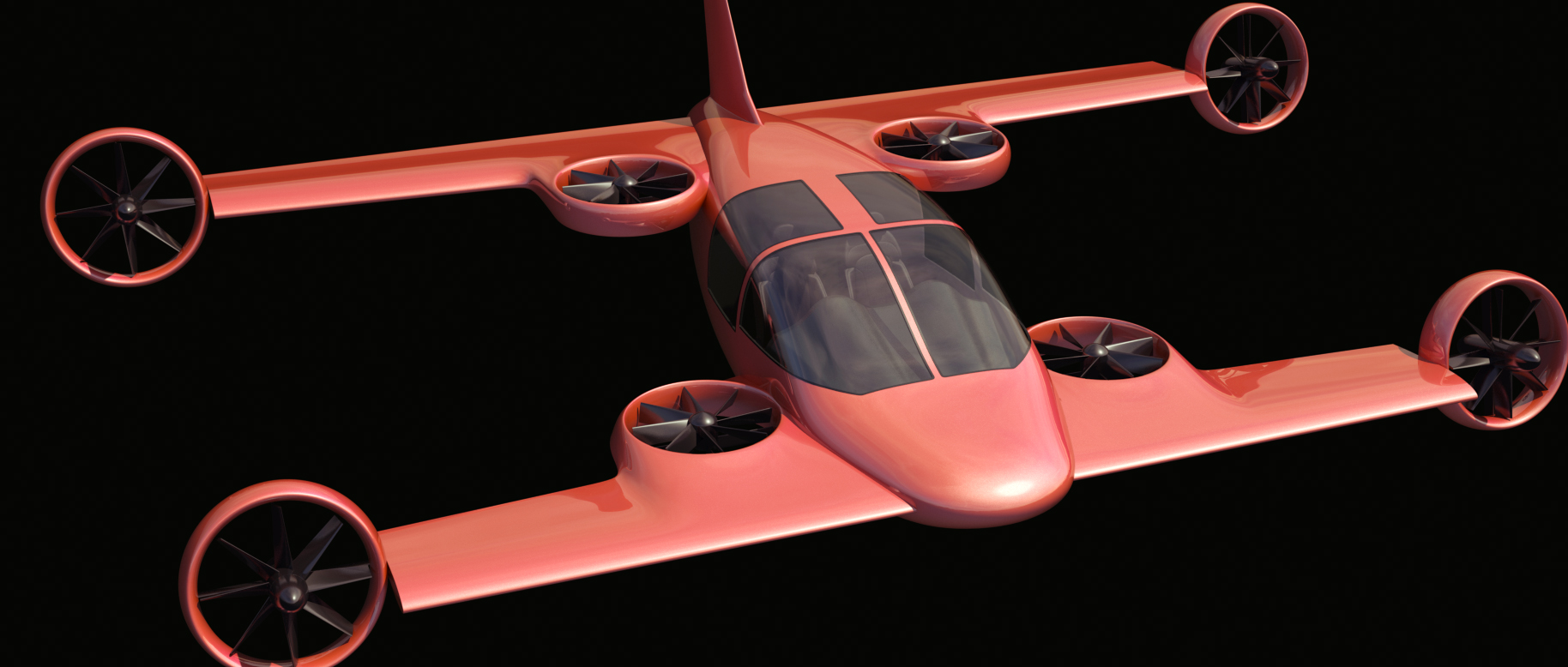
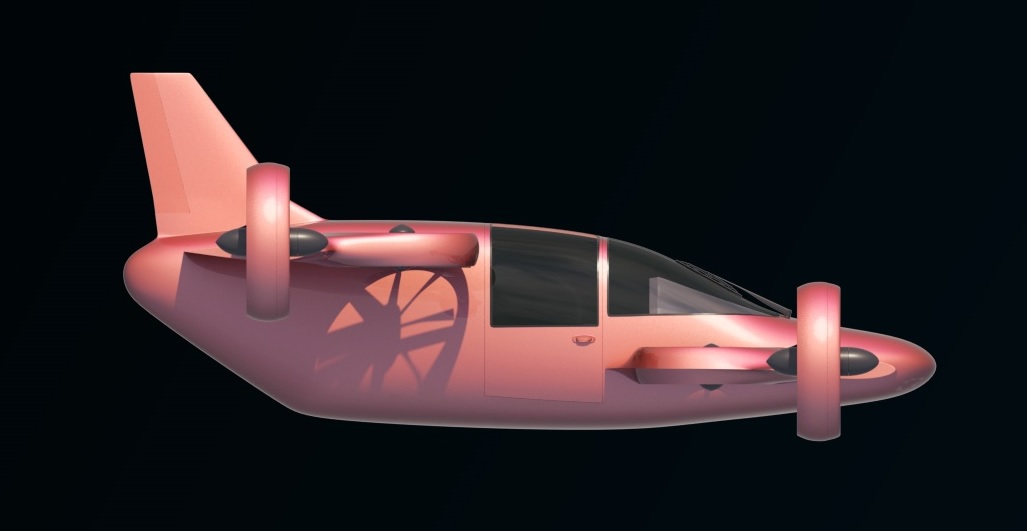
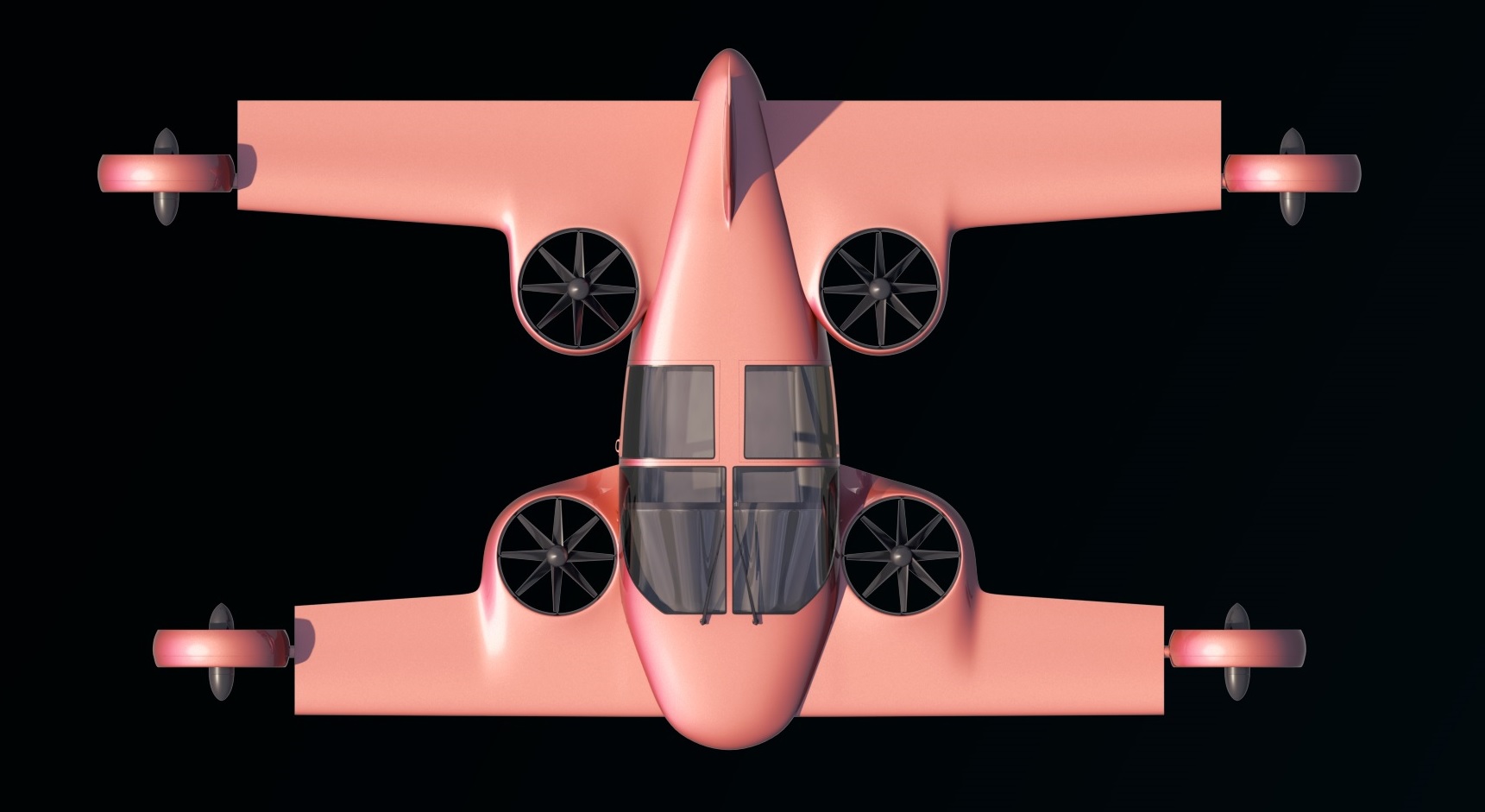
3-view layout
Three-view representation used to clarify the aircraft configuration.
|
3D mock-up
Digital mock-up supporting concept formulation and communication.
|


Project overview
TRL 2 – Technology Concept Formulated corresponds to the stage where the Mini-Bee project started to define a credible technical concept from the initial TRL 1 observations.
At this stage, the goal was not yet to validate a prototype. The objective was to describe a possible aircraft configuration, identify the main technical domains to study, and distribute work between academic contributors.
TRL 2 objective: formulate a first coherent Mini-Bee aircraft concept, supported by preliminary technical studies, mock-ups, simulations and mission assumptions.
Work done during TRL 2
During TRL 2, the Mini-Bee project benefited from a broad collaborative effort involving universities, engineering schools and technical contributors.
The work covered several technical and operational domains:
- aeronautical simulation;
- use cases and mission analysis;
- propulsion and engine assumptions;
- structural design;
- mechanical mock-up development;
- aerodynamic optimisation;
- equipment studies;
- human-machine interface;
- seats and safety;
- sensors and electromagnetic compatibility;
- rotor and power-chain optimisation;
- landing gear studies.
Academic and technical contributions
| Contributor | Main contribution | Documents |
|---|---|---|
| Centrale Supélec | Aeronautical simulation | |
| Estaca | Usages and engines | |
| Estaca SQY 4A | Structure | |
| Supmeca | Structural and mechanical mock-up | |
| ENSTA Bretagne | Scale flying mock-up and project presentation | |
| Polito | Equipment studies | |
| ENSEA | Human-machine interface | |
| INSA | Seat and occupant integration | |
| IUT Le Havre | Tilt mechanism studies | |
| IUT Rouen | Sensors and electromagnetic compatibility | |
| IUT Caen | Rotors and power-chain optimisation | |
| Esitech | Technical contribution | |
| Lycée Diderot | Rear landing gear |
Mock-up display
A digital 3D mock-up was created to support the understanding of the Mini-Bee configuration during the TRL 2 phase.
3D mock-up: Mini-Bee 3D mock-up by Hamza Fouatih.
Mini-Bee TRL 2 configuration visuals
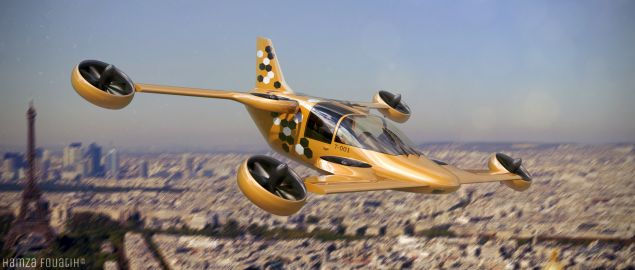
Taxi concept
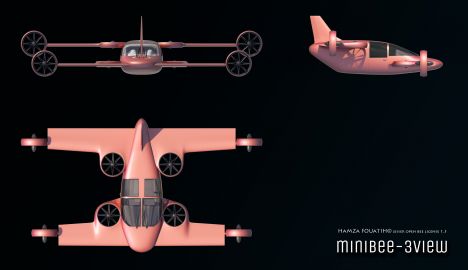
Three-view layout
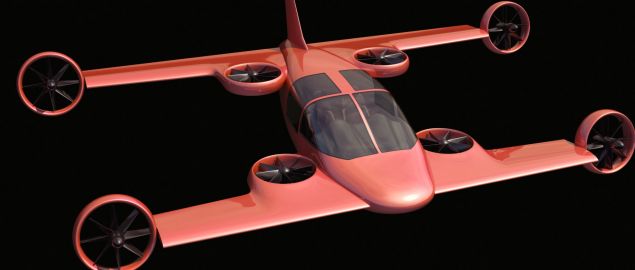
Early TRL2 visual
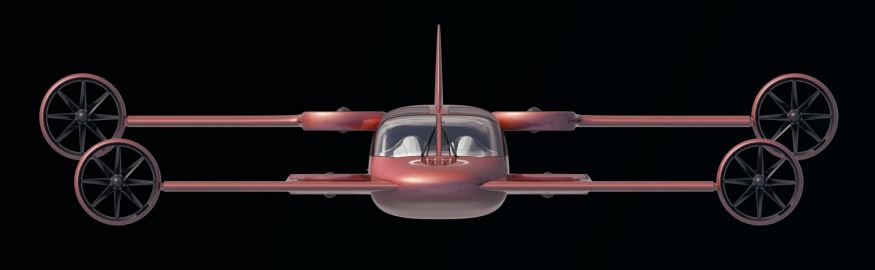
Front view
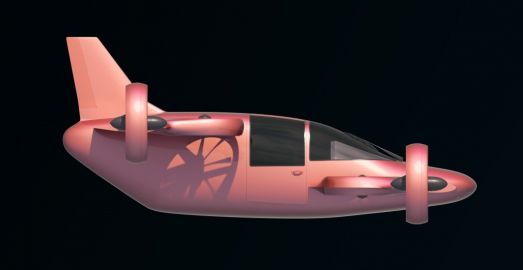
Side view
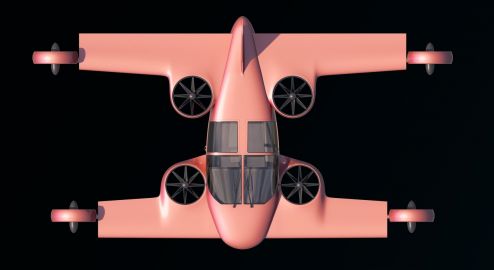
Top view
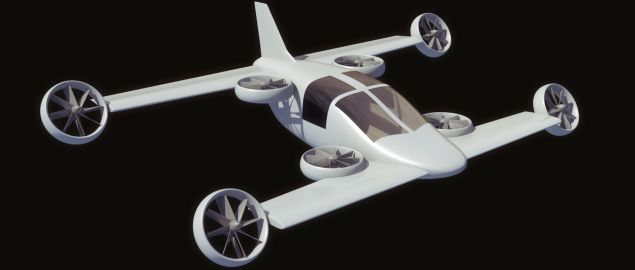
3D mock-up by Hamza Fouatih


Concept formulation at TRL 2
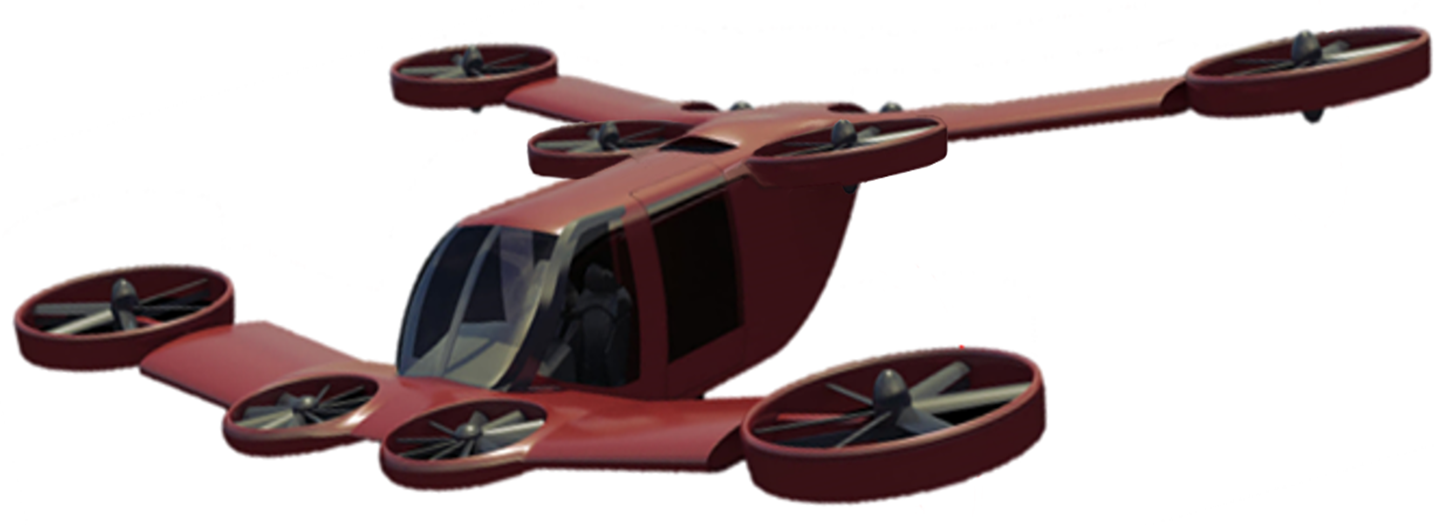
At TRL 2, the Mini-Bee concept was described as a hybrid VTOL aircraft intended to combine vertical take-off capability, distributed propulsion and mission flexibility.
The configuration studied at this stage included a larger aircraft concept than later versions of the Mini-Bee.
Important note: this page documents the historical TRL 2 configuration. Later TRL levels may describe updated Mini-Bee configurations, including revised rotor architecture, propulsion choices, mass assumptions and mission scope.
General characteristics
| Parameter | TRL 2 configuration |
|---|---|
| Crew | 2 pilots |
| Capacity | From 1 passenger and 1 patient to 3 passengers and 2 patients with central module |
| Length | 6.01 m / 19 ft 9 in |
| Height | 2.3 m / 7 ft 7 in |
| Empty weight | 850 kg / 1,873 lb |
| Maximum take-off weight | 1,200 kg / 2,643 lb |
| Powerplant | Piston engine for 250 kW at take-off and electric motors |
| Central rotor area | 12.6 m² / 41.5 sq ft |
| Wing rotor area | 10.6 m² / 35 sq ft |
| Wing area | 8.66 m² / 28.5 sq ft |
| Airfoil | Davis basic B-24 |
| Fuel capacity | 150 l |
Performance assumptions
| Parameter | TRL 2 assumption |
|---|---|
| Cruise speed | 250 km/h / 155 mph / 135 kn |
| Maximum speed | 300 km/h / 186 mph / 162 kn |
| Range | 500 km / 311 mi / 270 nm |
| Service ceiling | 4,000 m / 13,000 ft |
| Rate of climb | 6.45 m/s / 1,270 ft/min |
Additional concept visual


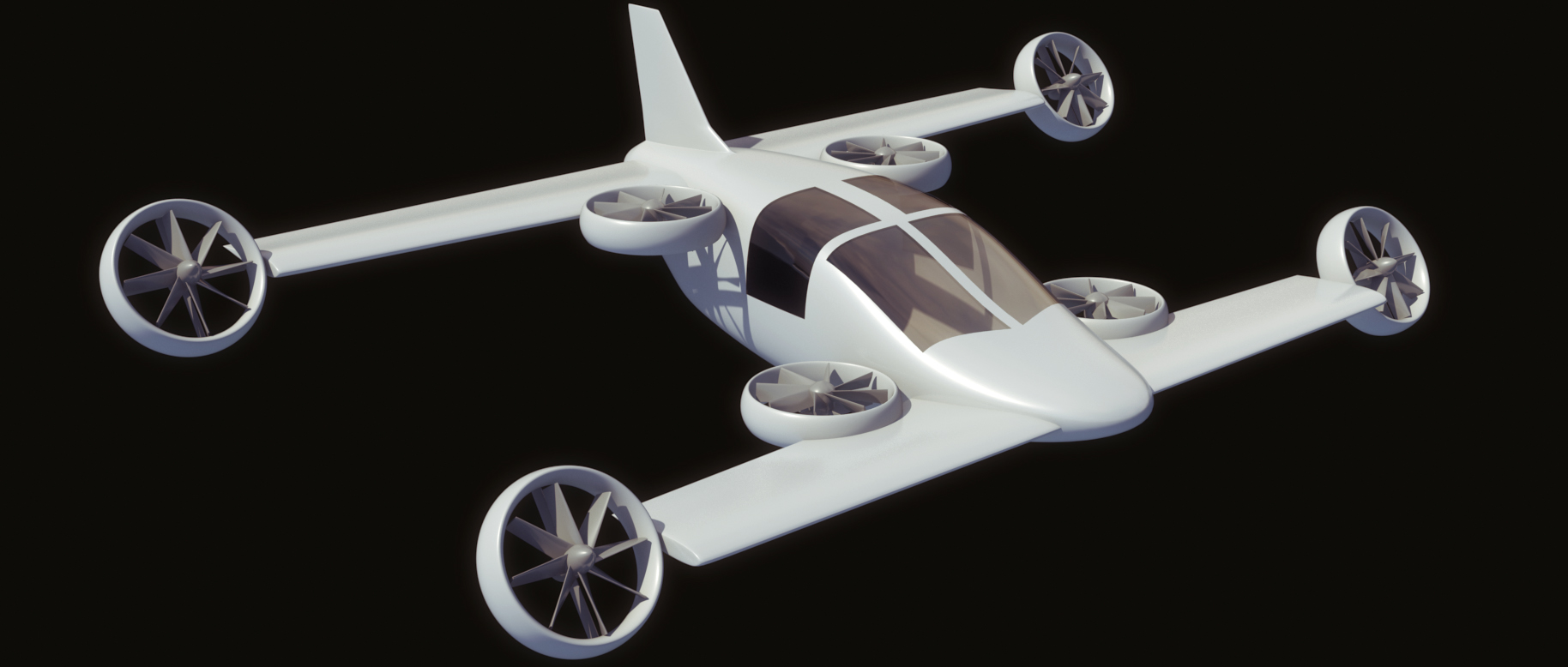
TRL 2 outputs
TRL 2 produced a first structured basis for the Mini-Bee aircraft concept.
|
Concept definition A first aircraft configuration was described, including dimensions, mass assumptions, rotor areas and performance targets. |
Collaborative studies Several academic teams contributed to simulation, structure, equipment, HMI, sensors, rotors and mechanical studies. |
Visual and mock-up support The TRL 2 stage included 3D mock-ups, three-view layouts and visual representations to clarify the aircraft concept. |
What TRL 2 clarified
|
Clarified during TRL 2
|
Still open after TRL 2
|
TRL 2 maturity logic
The TRL 2 phase helped transform the Mini-Bee from an early idea into a project with a visible concept structure.
| 1. Formulate | 2. Assign studies | 3. Model | 4. Compare | 5. Prepare TRL 3 |
| First aircraft concept | Academic work packages | Mock-ups and simulations | Mission and technology assumptions | Toward proof of concept |
Questions to solve before TRL 3
Before moving from TRL 2 to TRL 3, several questions had to be addressed:
- Which aircraft configuration should be retained for proof-of-concept work?
- Which propulsion architecture is realistic for vertical flight?
- What rotor distribution provides enough lift and redundancy?
- What structure can support the rotor system and mission loads?
- How should the flight control logic be tested?
- What mock-up or demonstrator is required to validate the main assumptions?
- Which mission should drive the next stage of development?
Image files used on this page
| Wiki file name | Use in page | Link |
|---|---|---|
| MiniBee_Taxi.jpg | Hero image, visual introduction and gallery | Open image |
| Minibee 3view.jpg | Visual introduction and gallery | Open image |
| 1.jpg | Gallery | Open image |
| Minibee 3view - front.jpg | Gallery | Open image |
| Minibee 3view - side.jpg | Gallery | Open image |
| Minibee 3view - top.jpg | Gallery | Open image |
| Mini-Bee TRL2 by Hamza Fouatih.jpg | Visual introduction and gallery | Open image |
| Minibeev14_image.png | Additional concept visual | Open image |

Why TRL 2 mattered
TRL 2 was a key step because it gave the Mini-Bee project its first formulated technical identity.
It created a common concept basis for academic partners, contributors and project coordination. It also allowed the project to move from early intuition toward structured design studies and future proof-of-concept work.
Transition to the next stage
Next maturity step: TRL 3 – Experimental Proof of Concept.
At TRL 3, the project moves from concept formulation to first analytical or experimental evidence supporting the main technical assumptions.