Minibee TRL0

== Quick project summary == {| style="width:100%; border-collapse:separate; border-spacing:12px; margin-bottom:20px;" |- | style="width:25%; vertical-align:top; border:1px solid #cfd6dd; background:#f6f8fa; padding:14px;" |
Mini-Bee | style="width:25%; vertical-align:top; border:1px solid #cfd6dd; background:#f6f8fa; padding:14px;" |
TRL 0 – Concept origin | style="width:25%; vertical-align:top; border:1px solid #cfd6dd; background:#f6f8fa; padding:14px;" |
Early concept phase / 2015 archive | style="width:25%; vertical-align:top; border:1px solid #cfd6dd; background:#f6f8fa; padding:14px;" |
Mission need, sketches, first sizing and assumptions |}
== Visual introduction == {| style="width:100%; border-collapse:separate; border-spacing:12px; margin-bottom:20px;" |- | style="width:33%; vertical-align:top; border:1px solid #cfd6dd; background:#ffffff; padding:10px; text-align:center;" |
| style="width:33%; vertical-align:top; border:1px solid #cfd6dd; background:#ffffff; padding:10px; text-align:center;" | 
| style="width:33%; vertical-align:top; border:1px solid #cfd6dd; background:#ffffff; padding:10px; text-align:center;" | 
|} == Project overview == The Mini-Bee concept started from the idea of a low-cost aircraft combining vertical take-off capability, high mobility, hybrid propulsion and useful mission applications. At this stage, the project was not yet a formulated technical concept. The objective was to explore whether a compact aircraft could combine the operational flexibility of a helicopter with simplified logistics and a more affordable architecture. The earliest studies considered a hybrid aircraft with electric propulsion for VTOL phases and a thermal engine for cruise or power generation. These assumptions evolved significantly in later TRL stages. == Concept origin == {| style="width:100%; border-collapse:separate; border-spacing:12px; margin:16px 0;" |- | style="width:20%; vertical-align:top; border:1px solid #cfd6dd; background:#ffffff; padding:12px;" | High mobility
Operate without relying only on conventional runway infrastructure. | style="width:20%; vertical-align:top; border:1px solid #cfd6dd; background:#ffffff; padding:12px;" | Low-cost idea
Explore a more accessible aircraft concept. | style="width:20%; vertical-align:top; border:1px solid #cfd6dd; background:#ffffff; padding:12px;" | Useful missions
Air ambulance, rescue, emerging-country mobility and personal air transport. | style="width:20%; vertical-align:top; border:1px solid #cfd6dd; background:#ffffff; padding:12px;" | VTOL capability
Take off and land vertically in constrained areas. | style="width:20%; vertical-align:top; border:1px solid #cfd6dd; background:#ffffff; padding:12px;" | Hybrid energy
Reduce battery dependence with a thermal power source. |} == Early mission framing == {| style="width:100%; border-collapse:separate; border-spacing:12px; margin:16px 0;" |- | style="width:33%; vertical-align:top; border:1px solid #cfd6dd; background:#ffffff; padding:12px;" |
The aircraft concept aimed to land in a wide range of locations, not only on conventional runways. | style="width:33%; vertical-align:top; border:1px solid #cfd6dd; background:#ffffff; padding:12px;" |
Early requirements included a strong cost objective to make the concept accessible and useful. | style="width:33%; vertical-align:top; border:1px solid #cfd6dd; background:#ffffff; padding:12px;" |
The early project logic included air ambulance, rescue missions and low-cost personal transportation. |} == Historical early assumptions == {| class="wikitable" style="width:100%;" |- ! style="width:35%; background:#eef1f4;" | Early assumption ! style="background:#eef1f4;" | Historical interpretation at TRL 0 |- | Hybrid configuration | Electric motors would support VTOL phases, while a thermal engine would provide cruise power and/or electrical generation. |- | VTOL capability | Vertical take-off and landing were identified as a key differentiator for high mobility. |- | Cruise speed | Early objectives mentioned a high cruise speed target around 300 ± 50 km/h. |- | Range | Early objectives mentioned an autonomy target between 600 and 800 km. |- | Mass and capacity | Early studies considered a larger aircraft concept, including 4 or 5 seats and an MTOW around 1550 kg. |- | Cost target | Early requirements mentioned a low-cost objective below 100,000 €. |}
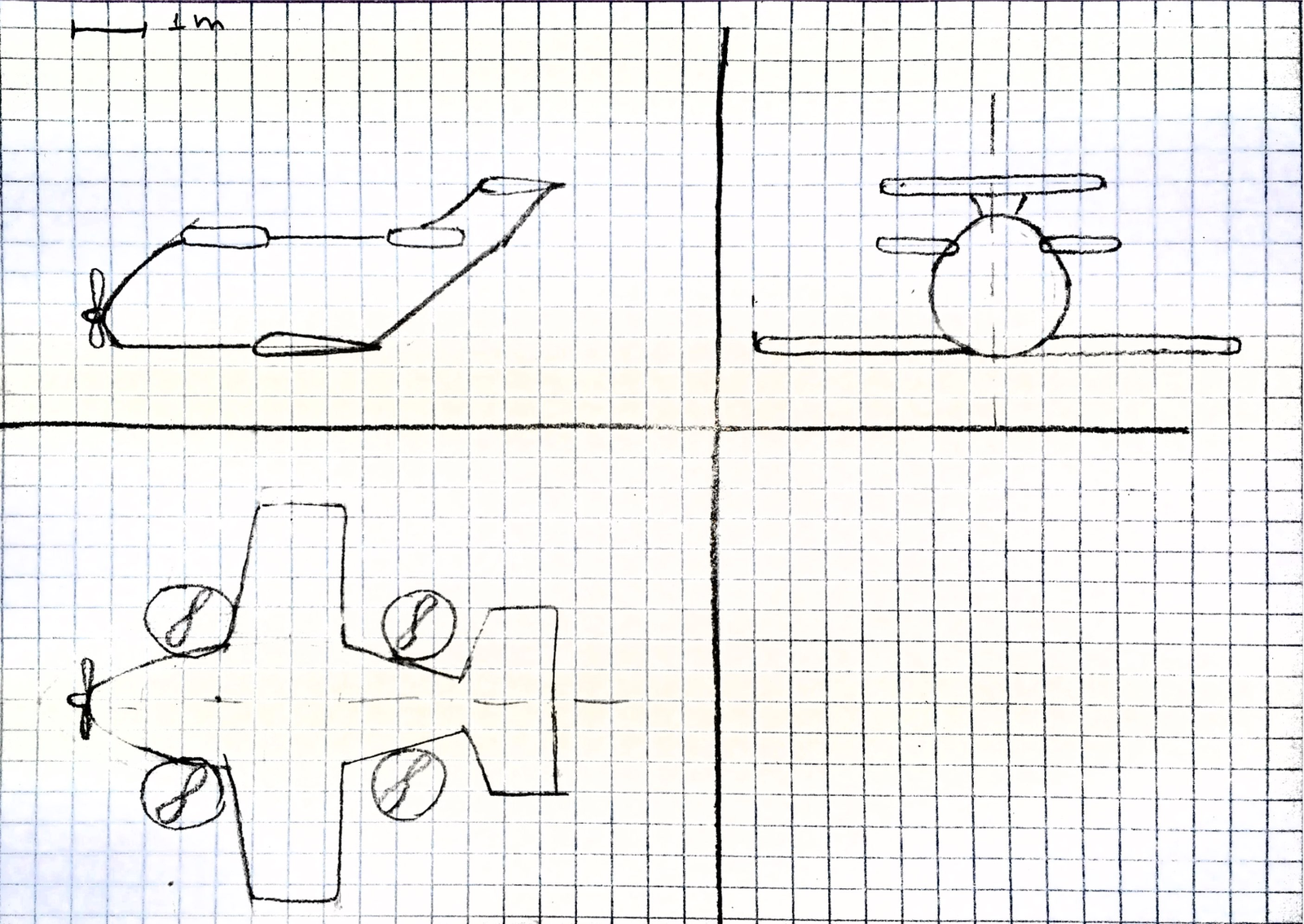
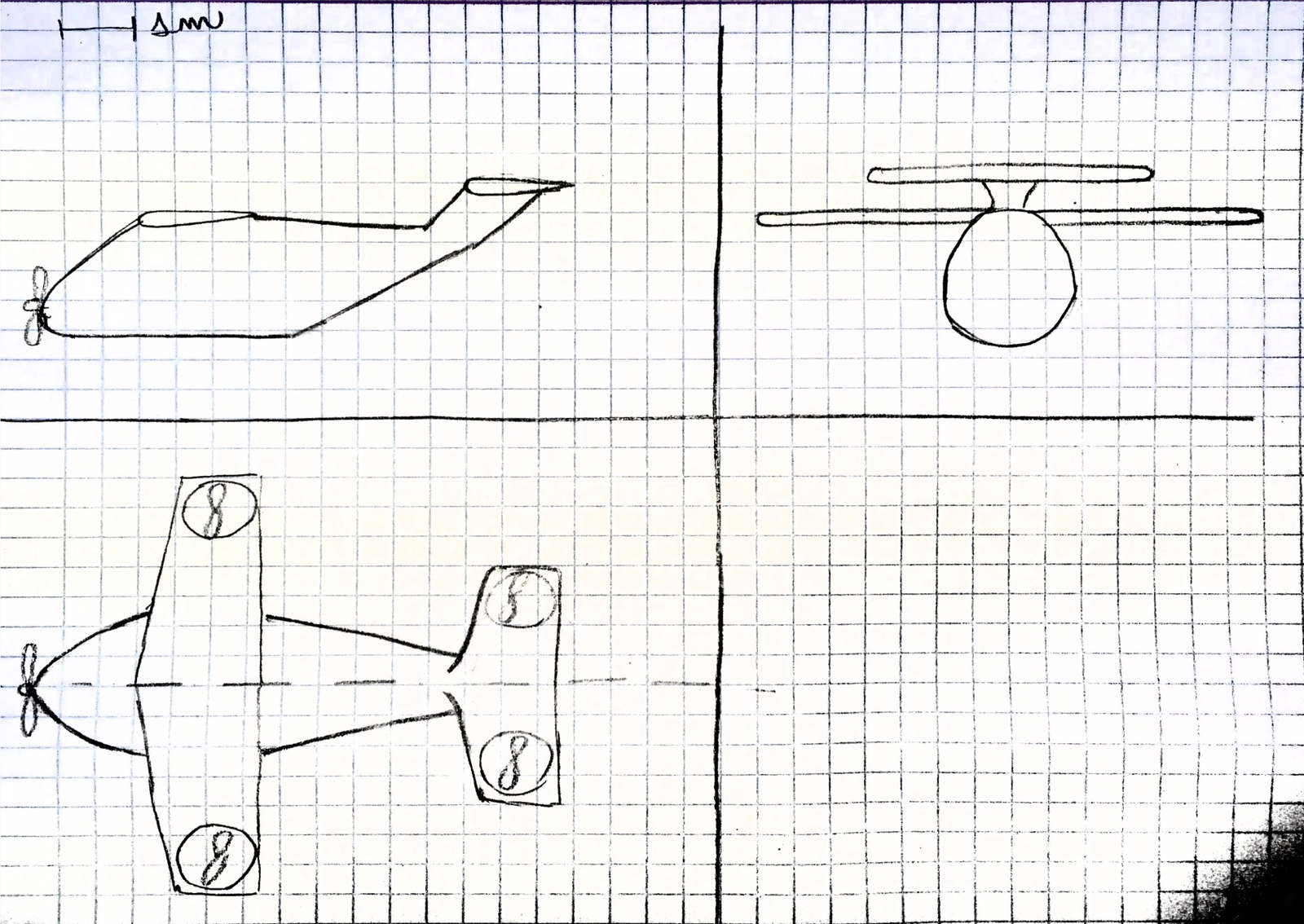
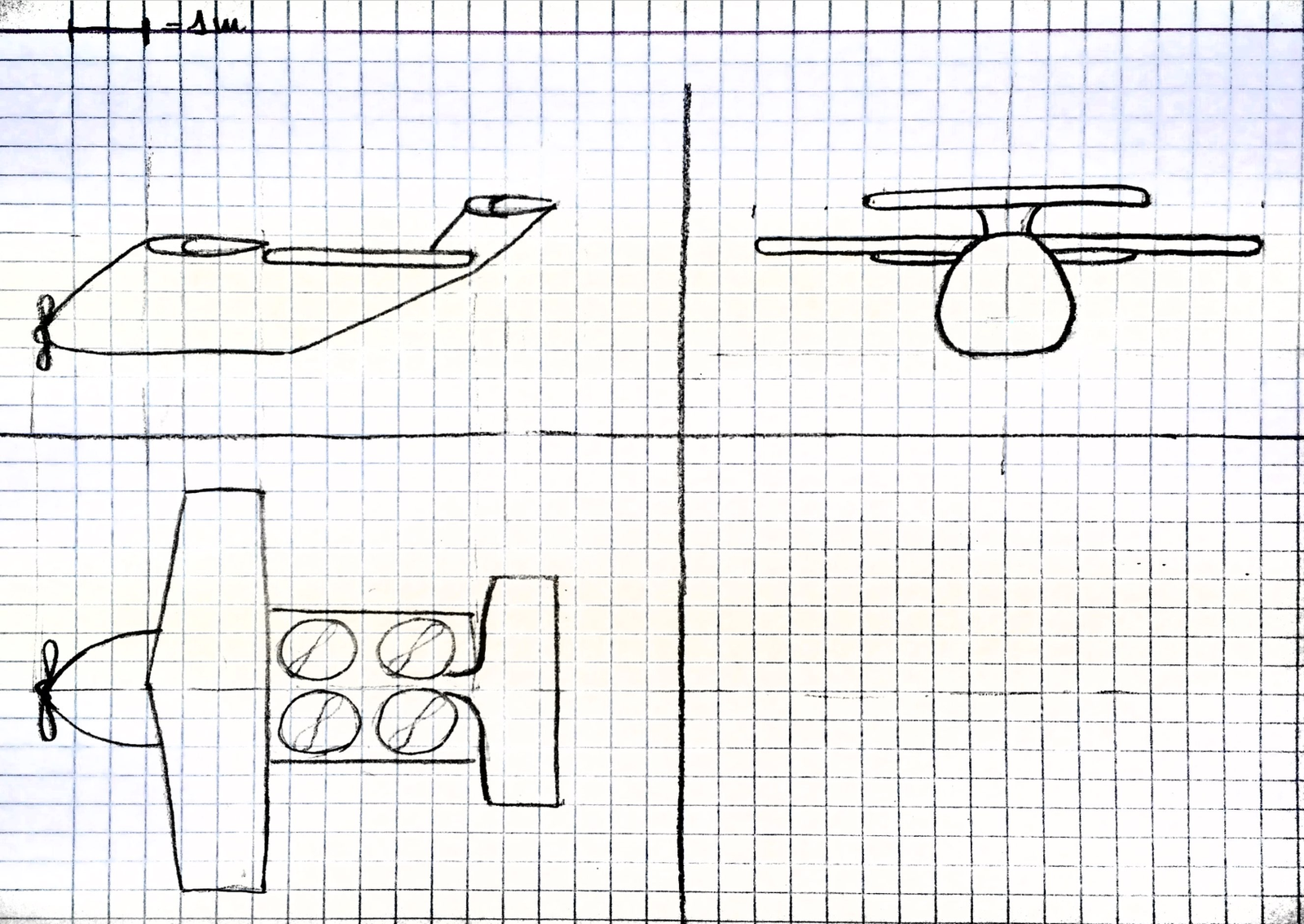
== First hand sketches == The first sketches helped transform a mission intuition into a visible aircraft idea.
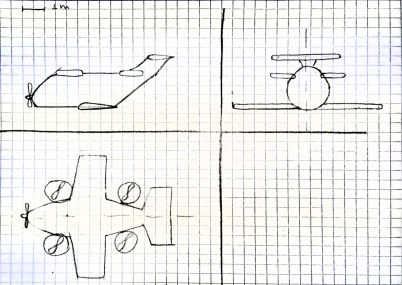
Early layout refinement
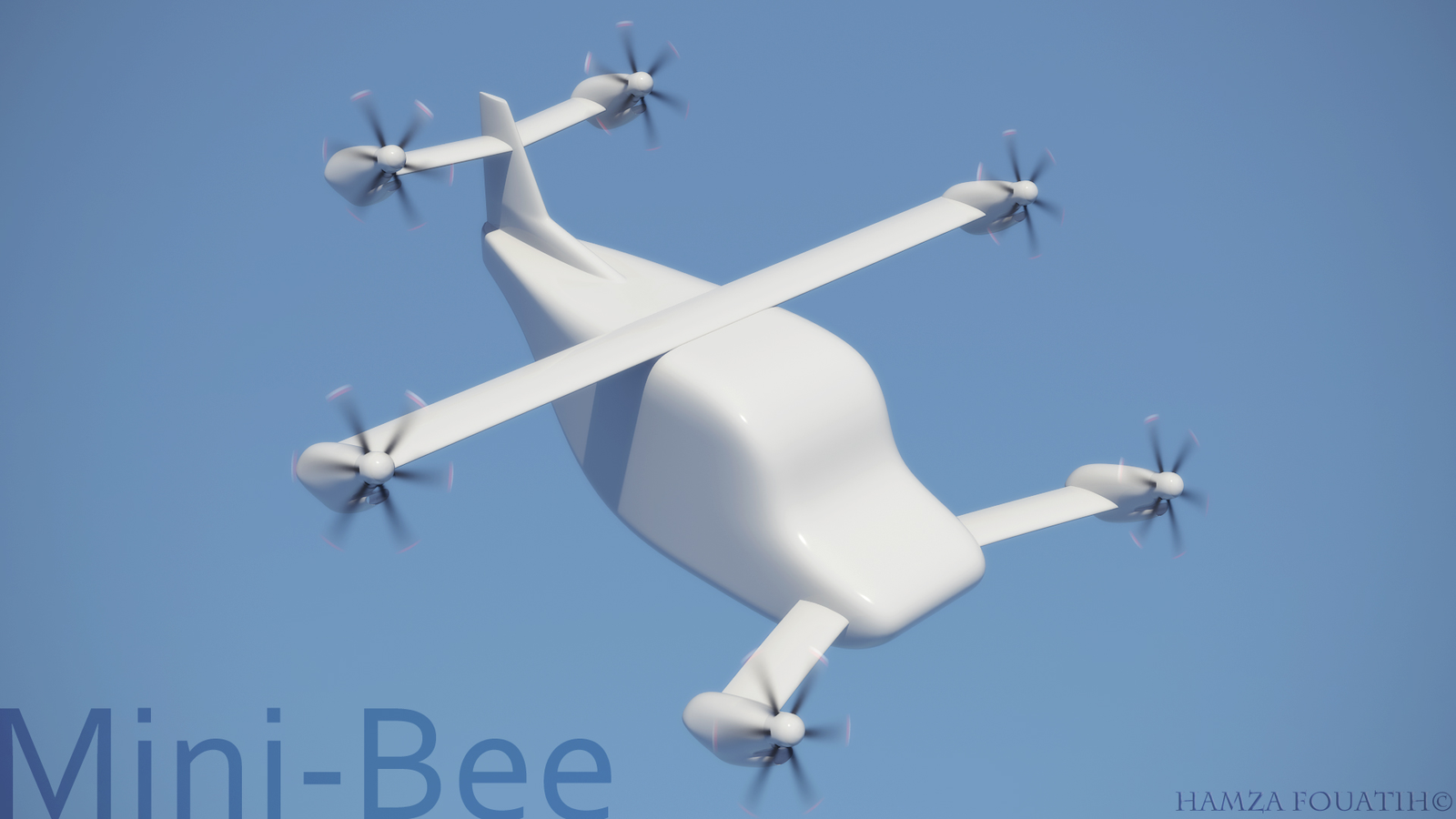
== Early digital concept ==
== Preliminary technical studies == TRL 0 included early analytical work to test whether the first aircraft intuition could become a credible project direction. {| style="width:100%; border-collapse:separate; border-spacing:12px; margin:16px 0;" |- | style="width:33%; vertical-align:top; border:1px solid #cfd6dd; background:#ffffff; padding:12px;" |
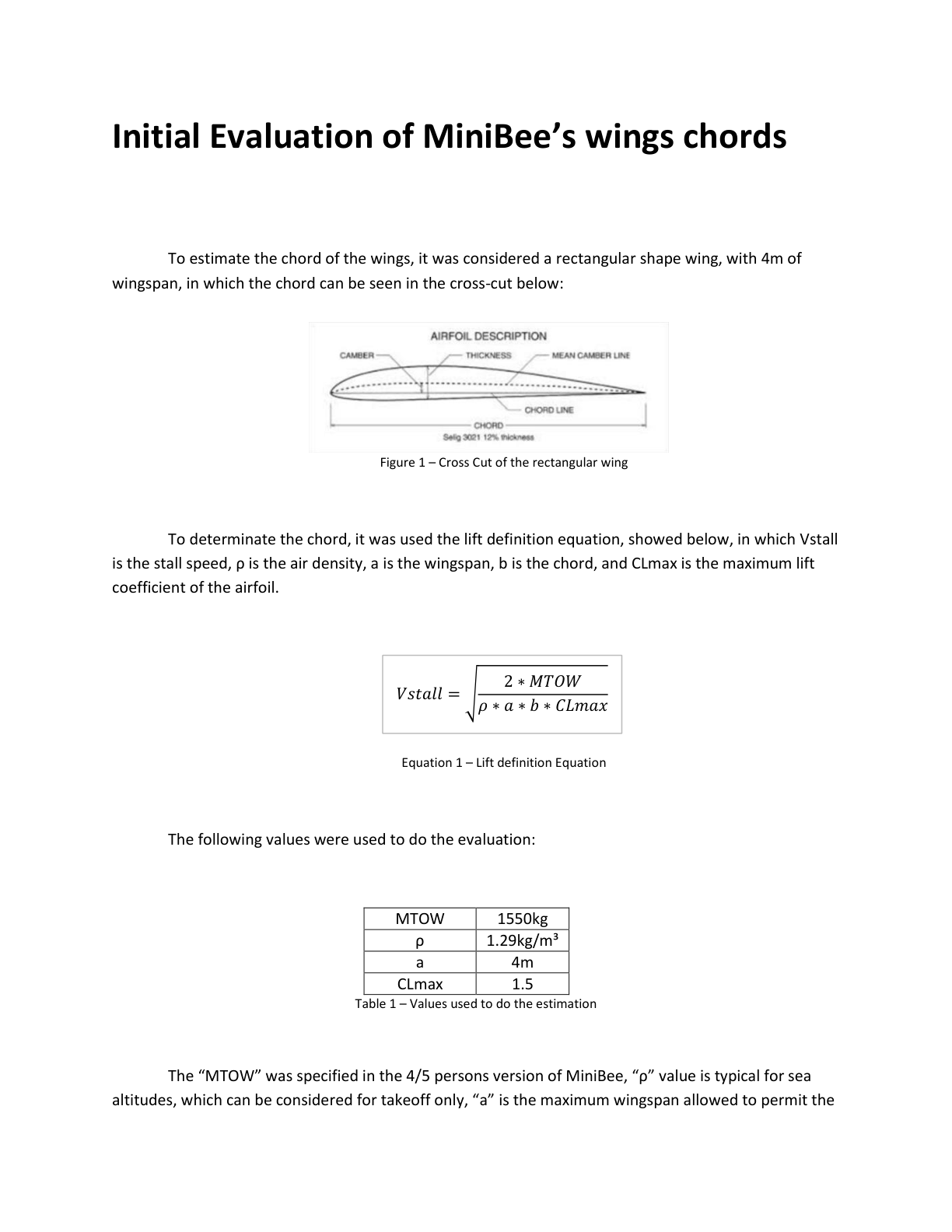
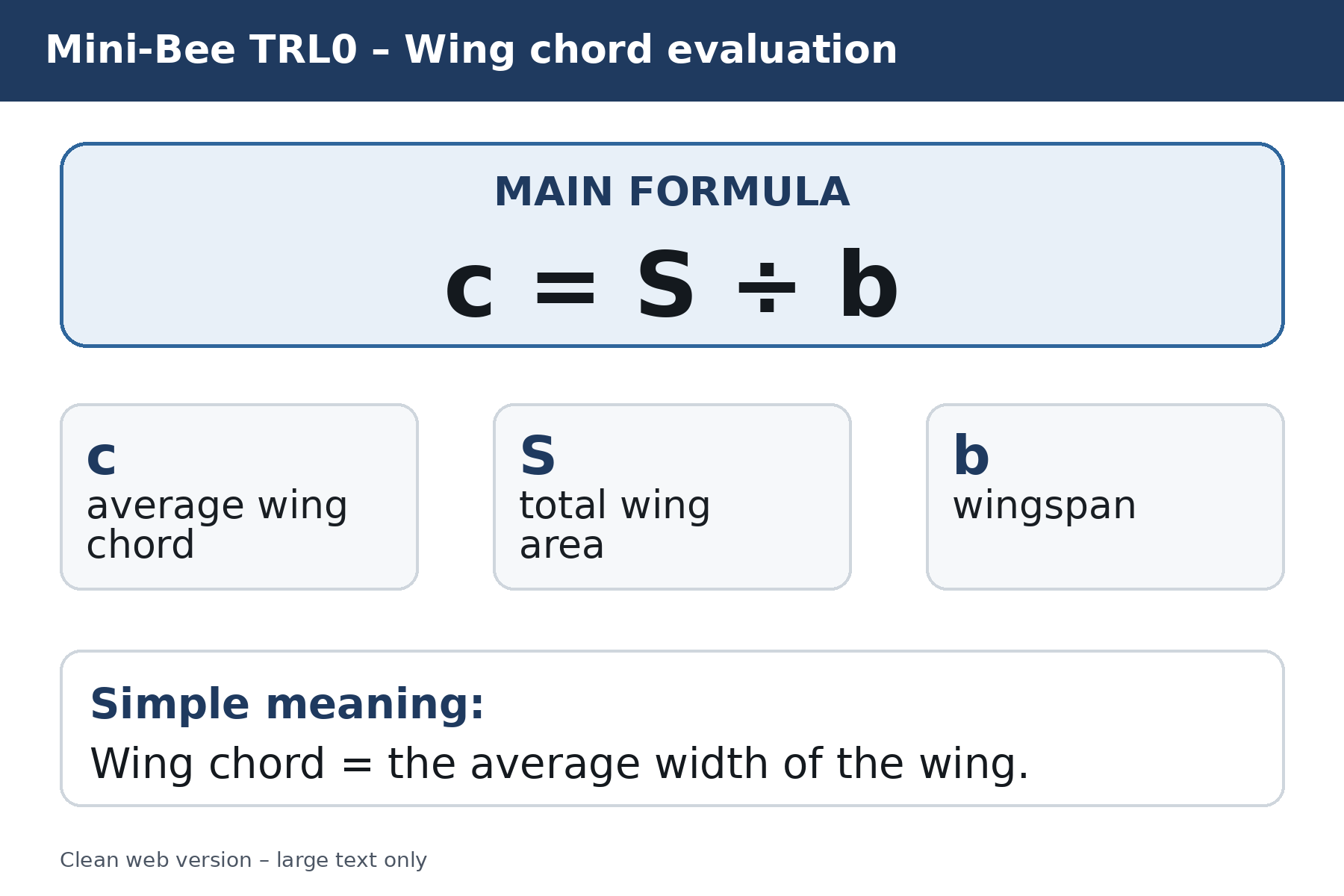
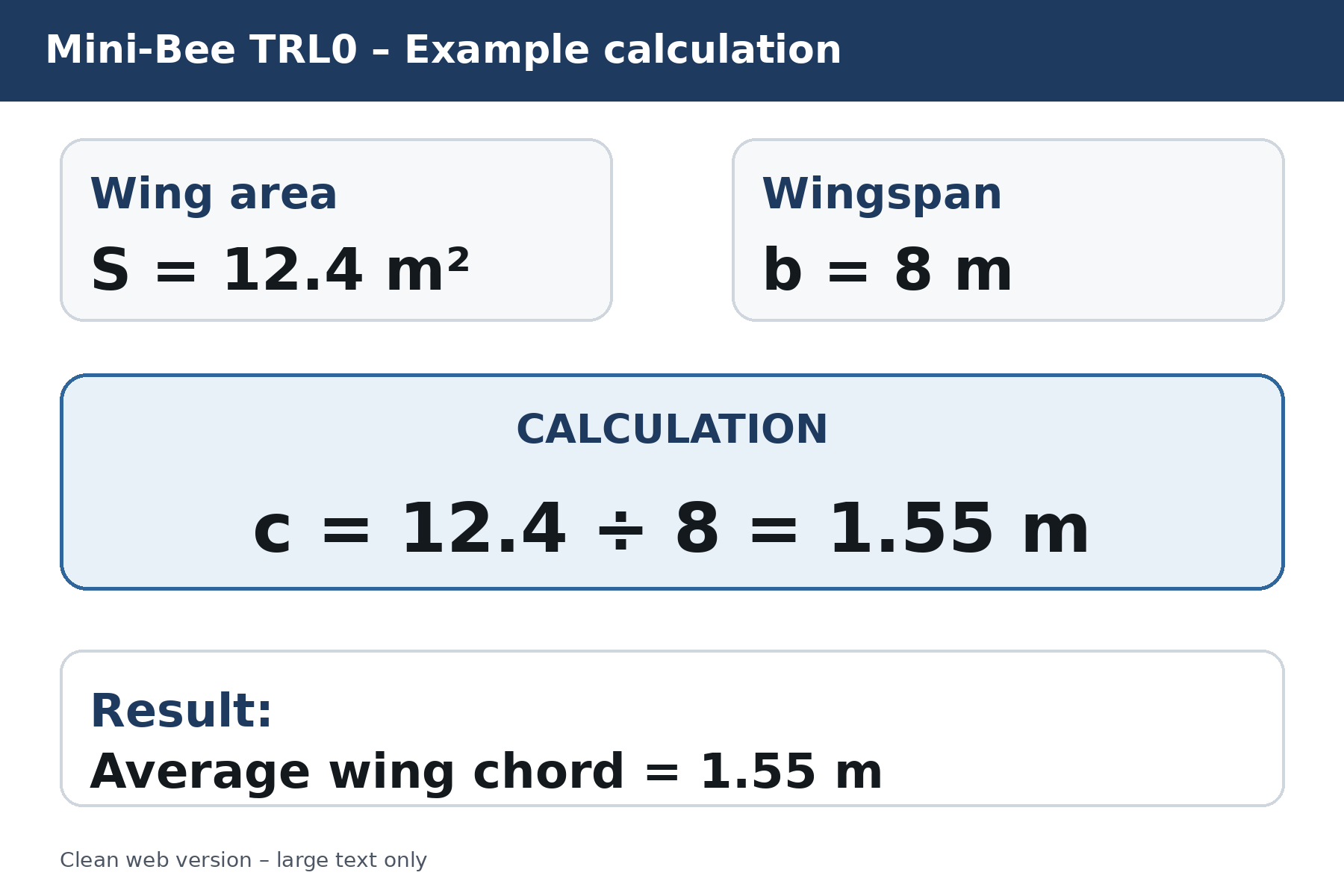
Initial chord evaluation explored wingspan, stall speed and wing chord. | style="width:33%; vertical-align:top; border:1px solid #cfd6dd; background:#ffffff; padding:12px;" |
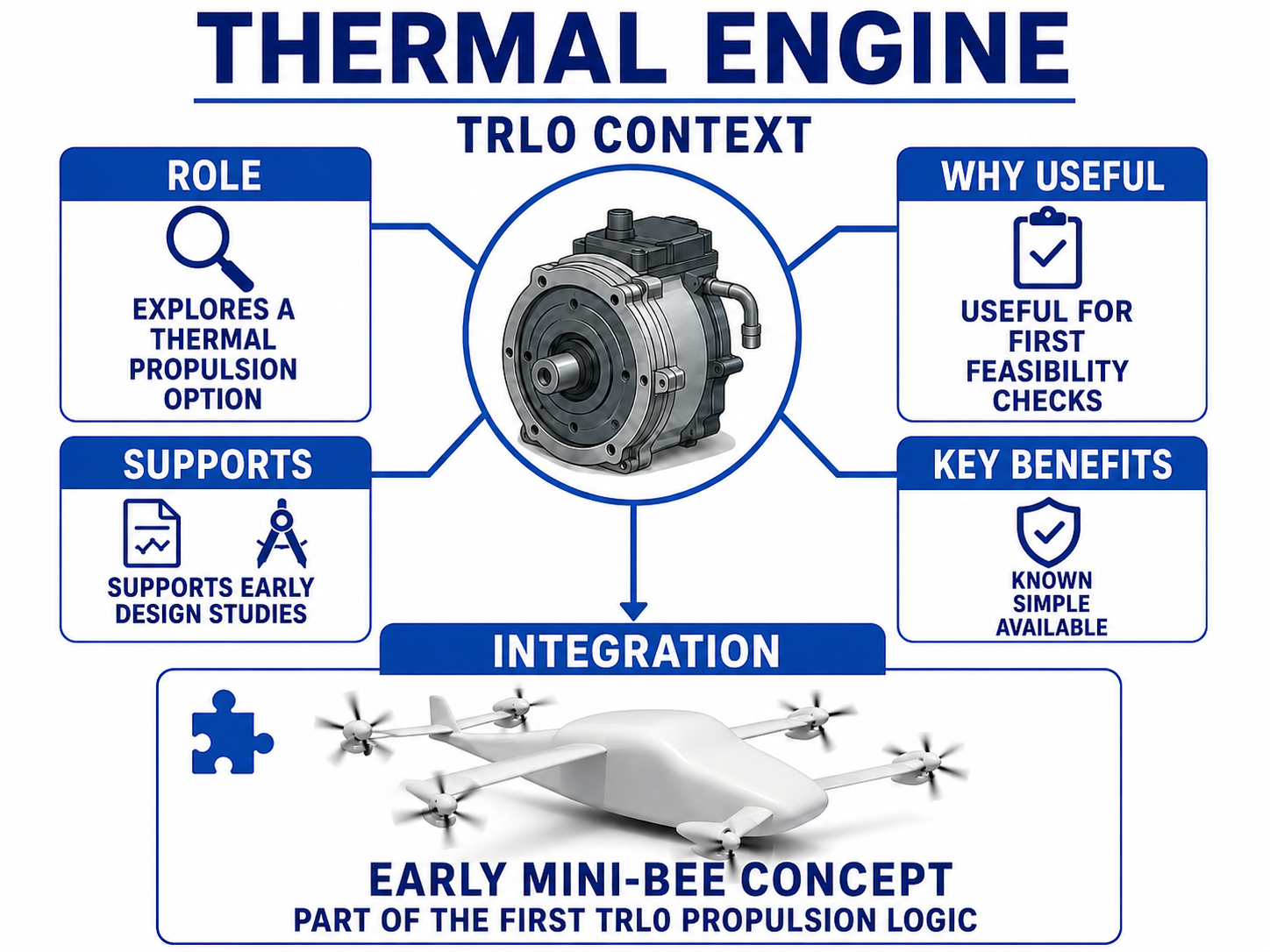
A first engine study examined the role of a thermal engine in a hybrid aircraft power architecture. | style="width:33%; vertical-align:top; border:1px solid #cfd6dd; background:#ffffff; padding:12px;" |
Early electric motor comparisons were used to understand the VTOL power-to-weight challenge. |} == Wing chord evaluation ==
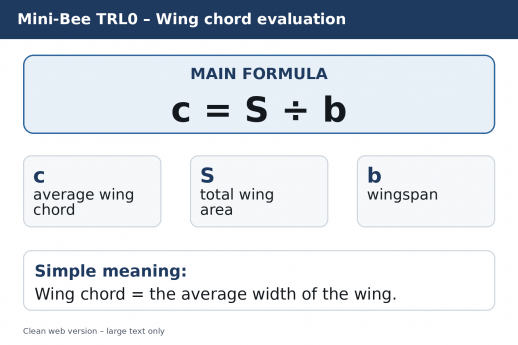
Initial wing chord evaluation – results table

== Engine and electric motor evaluation ==

Electric motor comparison

== Early requirement table ==

== What TRL 0 covered == {| style="width:100%; border-collapse:separate; border-spacing:12px; margin:16px 0;" |- | style="width:50%; vertical-align:top; border:1px solid #cfd6dd; background:#f6f8fa; padding:12px;" |
* first project intuition; * mission need exploration; * low-cost and high-mobility ambition; * first hand sketches; * first 3D concept communication visual; * initial mission and requirement framing; * early wing sizing study; * early propulsion screening; * early hybrid VTOL assumptions. | style="width:50%; vertical-align:top; border:1px solid #cfd6dd; background:#f6f8fa; padding:12px;" |
* validated aircraft architecture; * final rotor count; * mature hybrid chain; * detailed structural design; * flight control architecture; * certification framework; * demonstrator test plan; * validated performance data. |} == TRL 0 development logic == {| style="width:100%; border-collapse:collapse; text-align:center; margin:16px 0 20px 0;" |- | style="background:#1f3a5f; color:#ffffff; border:1px solid #cfd6dd; padding:10px; font-weight:bold;" | 1. Imagine | style="background:#f3f5f7; border:1px solid #cfd6dd; padding:10px; font-weight:bold;" | 2. Sketch | style="background:#f3f5f7; border:1px solid #cfd6dd; padding:10px; font-weight:bold;" | 3. Frame | style="background:#f3f5f7; border:1px solid #cfd6dd; padding:10px; font-weight:bold;" | 4. Screen | style="background:#f3f5f7; border:1px solid #cfd6dd; padding:10px; font-weight:bold;" | 5. Prepare TRL 1 |- | style="border:1px solid #cfd6dd; padding:8px;" | Mission intuition | style="border:1px solid #cfd6dd; padding:8px;" | Hand sketches and early visuals | style="border:1px solid #cfd6dd; padding:8px;" | Needs and constraints | style="border:1px solid #cfd6dd; padding:8px;" | First technical evaluations | style="border:1px solid #cfd6dd; padding:8px;" | Basic principles observed |} == Source documents == {| class="wikitable" style="width:100%;" |- ! style="width:40%; background:#eef1f4;" | Document ! style="background:#eef1f4;" | Use in TRL 0 page |- | File:MiniBee HandScketch.pdf | First hand sketches and early visual layout studies. |- | File:Initial Evaluation of MiniBee.pdf | Initial wing chord evaluation and first sizing assumptions. |- | File:Engine Repport.pdf | Thermal engine and electric motor screening. |- | File:BeePlane Info v1.1.pdf | Early mission statement, requirements, diagrams and project framing. |} == Image files used on this page == {| class="wikitable" style="width:100%;" |- ! style="width:40%; background:#eef1f4;" | Wiki file name ! style="width:30%; background:#eef1f4;" | Use in page ! style="background:#eef1f4;" | Link |- | mb_trl0_early_3d_render.png | Hero image, visual introduction and early digital concept | Open image |- | mb_trl0_hand_sketch_01.png | Visual introduction and sketch gallery | Open image |- | mb_trl0_hand_sketch_02.png | Sketch gallery | Open image |- | mb_trl0_hand_sketch_03.png | Sketch gallery | Open image |- | mb_trl0_wing_chord_eval_01.png | Wing chord evaluation | Open image |- | mb_trl0_wing_chord_eval_02.png | Wing chord evaluation | Open image |- | mb_trl0_engine_thermal.png | Thermal engine evaluation | Open image |- | mb_trl0_engine_electric_motors.png | Electric motor evaluation | Open image |- | mb_trl0_supmeca_report_cover.png | Visual introduction and early project report | Open image |- | mb_trl0_project_requirements.png | Early requirement table | Open image |} == Why TRL 0 mattered == TRL 0 mattered because it captured the first project intuition before formal technical maturity could be claimed. It helped transform an idea into a project direction: a hybrid aircraft with VTOL capability, practical missions, high mobility and a need for technical validation. This stage prepared the transition toward TRL 1, where the first basic principles of the Mini-Bee concept could be observed and documented. == Transition to the next stage ==

At TRL 1, the project moves from early intuition and exploratory material toward the identification of basic principles that justify a structured concept phase. == See also == * TRL 1 – Mini-Bee * TRL 2 – Mini-Bee * TRL 3 – Mini-Bee * TRL 4 – Mini-Bee * Mini-Bee project * Collaborative Bee Projects