Minibee TRL3
TRL 3 – Mini-Bee | Experimental Proof of Concept
|
At TRL 3, the Mini-Bee project moved from a formulated concept toward early experimental proof-of-concept work. This stage included configuration studies, hybrid power generation simulations, structural reviews, motor and electrical test benches, FCU prototypes, scale mock-ups and preparation for the future TRL 4 demonstrator phase. The TRL 3 work was completed in 2022. This page documents the historical TRL 3 phase of the Mini-Bee project. |
Mini-Bee TRL3 configuration – end of TRL 3 / beginning of TRL 4
|
Quick project summary
|
Project |
TRL stage |
Status |
Next stage |
Status note: the TRL 3 task is no longer active. It was completed in 2022. For the current project status, go back to the Mini-Bee main page.
Visual introduction
|
End of TRL 3 configuration
Historical hybrid VTOL configuration studied at the end of TRL 3.
|
TRL 3 visual study
Project visual used during the TRL 3 academic development phase.
|
Concept overview
Overview visual supporting the transition from TRL 3 toward higher maturity.
|

Project overview
TRL 3 – Experimental Proof of Concept corresponds to the stage where the Mini-Bee project started to support the concept with early analysis, simulation, mock-up work and subsystem prototyping.
The objective was to move beyond concept formulation and begin testing whether the key technical assumptions could support a realistic hybrid VTOL aircraft development path.
TRL 3 objective: produce early proof-of-concept evidence for the Mini-Bee hybrid VTOL architecture through simulations, mock-ups, subsystem studies and first prototype work.
End of TRL 3 / beginning of TRL 4 summary
At the end of TRL 3, in summer 2022, the Mini-Bee project had reached a more defined historical configuration for a 2PAX hybrid VTOL aircraft.
| Item | Historical TRL 3 configuration |
|---|---|
| Main thermal engine | 1 Rotax 915 iS |
| Electric generation | 2 Emrax 268 twin units |
| Distributed lift system | 60 electric engines with propellers |
| Aircraft role | 2PAX hybrid VTOL multicopter, including ultra-light air ambulance mission potential |
| Main transition objective | Prepare the project for TRL 4 demonstrator development |
Main TRL 3 / TRL 4 transition document: File:20220629 Mini-Bee v15.pdf

Historical configuration note
This page documents the historical TRL 3 configurations studied between 2018 and 2022.
Important note: TRL 3 configurations are historical project configurations. Later TRL levels may describe updated Mini-Bee architectures, including revised rotor count, propulsion choices, mass assumptions and mission scope.
Main technical directions at TRL 3
|
Hybrid propulsion Simulation and study of a piston-engine-based hybrid power chain combined with electric propulsion. |
Distributed rotors Study of multi-rotor lift architectures, including 36-rotor and 60-rotor configurations. |
Proof-of-concept work Subsystem prototyping, test benches, structural analysis and early FCU studies. |
|
Structure and crashworthiness Structural studies, fuselage configuration and crash or absorption calculations. |
Flight Control Unit Early FCU prototypes and requirements for distributed rotor control. |
Demonstrator preparation Preparation for full-scale model work and transition toward TRL 4. |
Past configuration 2021 / 2022 – End of TRL 3
The objective during this period was to move toward a full-scale model of a hybrid VTOL aircraft and prepare a real hybrid propulsion configuration.
A full-scale half-cockpit display had already been achieved at the Paris Air Show 2019, and the next objective was to prepare a full twin-engine test configuration.
| Topic | Contributor / scope | Document |
|---|---|---|
| Technical review | Ecole Centrale Lille | File:2022 06 16 Réunion technique MiniBee ECL.pdf |
| Hybrid power generation simulation | Hybrid power chain analysis | File:Rapport finale Mini Bee.pdf |
| Energy project | Estaca Laval 5A ISPEB | File:20220207 Présentation Projet ISPEB v1.pdf |
| Feasibility review | Estaca SQY 3A | File:Soutenance finale PIA 10 05 2022.pdf |
| Motor and electricity test bench | Esigelec | File:2022-02-08 Soutenance ping Esigelec.pdf |
| Architecture review | Estaca 4A ASA Laval | File:20211206 ESTACA5A ASA Prés.pdf |
| FCU prototype | Cytech | File:Abstract CY Tech Mini Bee 2022.pdf |
| FCU prototype | Estaca SQY | |
| Project evolution summary | Mini-Bee project history | File:Mini-Bee Evolution Projets v1.pdf |
2021 / 2022 visual configuration
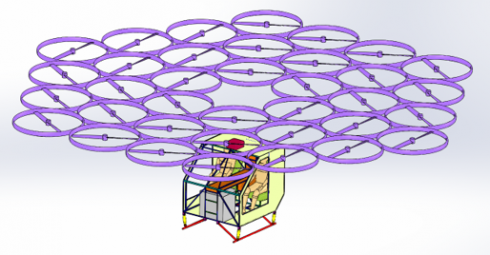
Configuration study – view 1
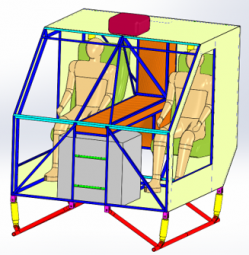
Configuration study – view 2
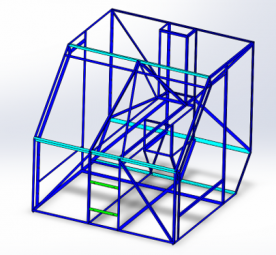
Configuration study – view 3
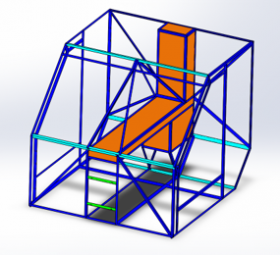
Configuration study – view 4
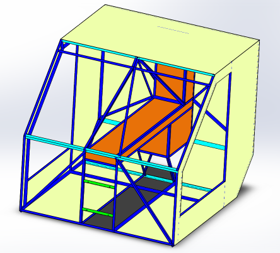
Configuration study – view 5
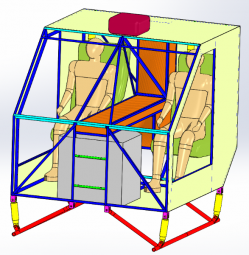
Configuration study – view 6
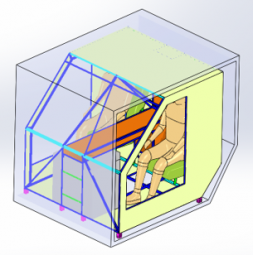
Configuration study – view 7
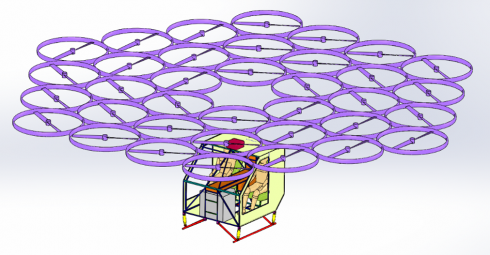
Configuration study – view 8


Projects 2021 / 2022
| Contributor | Work package | Document |
|---|---|---|
| Estaca Laval ASA | Fuselage configuration of Mini-Bee with 36 rotors | File:Conclusion Projet ASA 2021-22.pdf |
| Estaca Laval ISPEB | Energy project on Mini-Bee | File:20220207 Présentation Projet ISPEB v1.pdf |
Past configuration 2020 / 2021
During the 2020 / 2021 period, the Mini-Bee TRL 3 configuration focused on a 2PAX hybrid VTOL concept with a different distributed rotor architecture.
| Item | Historical 2020 / 2021 configuration |
|---|---|
| Thermal engine | 1 Rotax 915 iS |
| Electric generation | 2 Emrax 268 twin units |
| Distributed propulsion | 36 electric T-Motors with 36 propellers |

| Topic | Document |
|---|---|
| Project update | File:20210622 Mini-Bee v11.pdf |
| Intermediate work by Supmeca | File:20210607 Suivi Projet Supméca v9.pdf |
| Structural analysis and crash / absorption calculation | File:20210127 Projet MiniBee-V6.pdf |
| Main technical orientation for 2PAX configuration | File:202006 ISAE Supaero Mini-Bee PIR-Report.pdf |
| Esigelec work | |
| Lycée Louis Armand | File:202012 Vue Minibee Louis Armand.pdf |
| TRL 3 technical materials | Minibee TRL3 |
2020 / 2021 visual archive
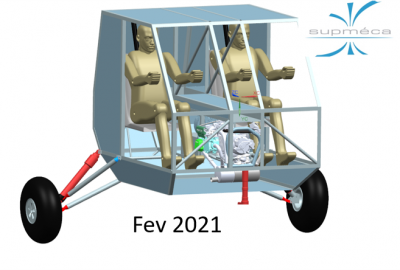
Mini-Bee visual study
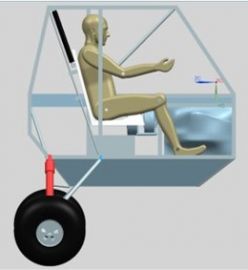
Mini-Bee visual study


Work done during academic year 2020 / 2021
| Contributor / topic | Contribution | Document |
|---|---|---|
| Structural review | Structural analysis and crash / absorption calculation | File:20210127 Projet MiniBee-V6.pdf |
| ISAE Supaero | Main technical orientation for 2PAX configuration, single Rotax 915 iS engine as generator and vertical electric rotors | File:202006 ISAE Supaero Mini-Bee PIR-Report.pdf |
| Lycée Louis Armand | Structural upgrade of rotor architecture and 2PAX fuselage | File:202012 Vue Minibee Louis Armand.pdf |
Work done during academic year 2019 / 2020
| Contributor | Documents |
|---|---|
| Centrale Lille | |
| Centrale Supélec | |
| Esigelec | |
| Estaca Laval 4A Propeller | |
| Estaca SQY 4A Certification | |
| Estaca SQY 5A Structure | |
| Estaca SQY 5A Propulsion | File:20200207 FINAL-Présentation avancement ISPEB.pdf |
| Supaero | File:202006 ISAE Supaero Mini-Bee PIR-Report.pdf |
| Supmeca |

Work done during academic year 2018 / 2019
ENSAM certification review
| Document | Link |
|---|---|
| CDCF V1 | File:CDCF V1 2018-12-11.pdf |
| ENSAM Livrable WP1 | File:Livrable WP1 V1 2018-12-11.pdf |
| ENSAM Livrable WP2 | File:Livrable WP2 V1 2018-12-11.pdf |
| ENSAM Livrable WP3 | File:Livrable WP3 V1 2018-12-11.pdf |
| ENSAM macro-planning | File:Macro-planning 2018-12-07.pdf |
| ENSAM management plan | File:Plan Management V1 2018-12-11.pdf |
| ENSAM certification plan | File:PlanCertif V1 2018-12-11.pdf |
| ENSAM risk review | File:Toprisque point bloq V1 2018-12-11.pdf |
TRL 3 visual archive
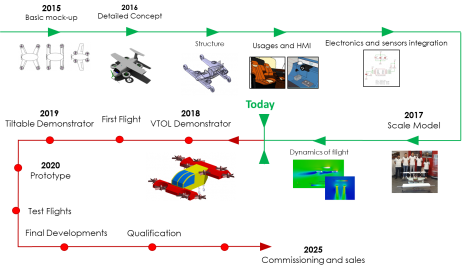
Project overview visual
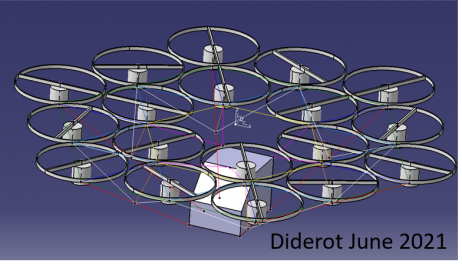
Intermediate rotor configuration
Visual study
Visual study
Presentation for academic projects
Academic presentation material: File:2020 09 Méca vol VTOL Estaca Laval ISPEB.pptx
TRL 3 technical outputs
TRL 3 produced early technical evidence and project maturity in several domains.
|
Hybrid energy studies The project developed simulations and technical reviews of the hybrid power generation chain. |
Subsystem prototyping Motor, electricity and FCU test-bench activities helped prepare the next demonstrator stage. |
Architecture reviews Several teams reviewed structure, feasibility, certification and rotor architecture. |
What TRL 3 clarified
|
Clarified during TRL 3
|
Still open after TRL 3
|
TRL 3 maturity logic
The TRL 3 phase helped transform the Mini-Bee from a formulated concept into a project with early analytical and experimental evidence.
| 1. Study | 2. Simulate | 3. Prototype | 4. Review | 5. Prepare TRL 4 |
| Technical studies | Hybrid power and flight assumptions | FCU and test benches | Architecture and feasibility reviews | Demonstrator definition |
Questions to solve before TRL 4
Before moving from TRL 3 to TRL 4, several questions had to be addressed:
- Which rotor architecture should be retained for demonstrator work?
- How should the hybrid power chain be tested at representative scale?
- What FCU architecture is required to control a large distributed rotor system?
- What structural concept is suitable for the next demonstrator?
- How should safety be addressed for loss of rotor, loss of power or loss of control?
- Which configuration should become the baseline for TRL 4?
- What test benches are required before full demonstrator integration?
Historical TRL 2 reference visuals
The following gallery is kept as a reference to the previous TRL 2 configuration.
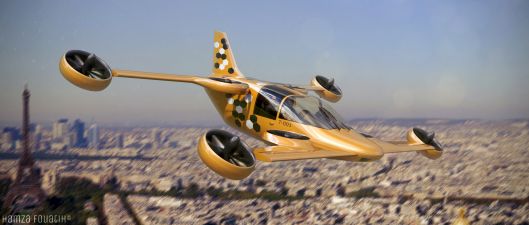
TRL2 taxi concept
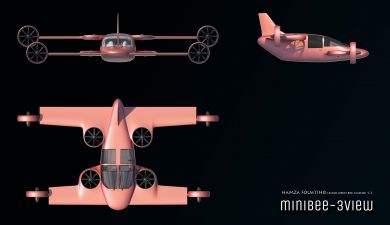
TRL2 three-view layout
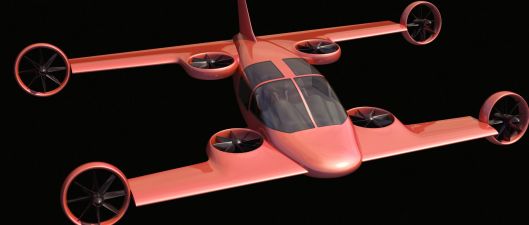
TRL2 visual
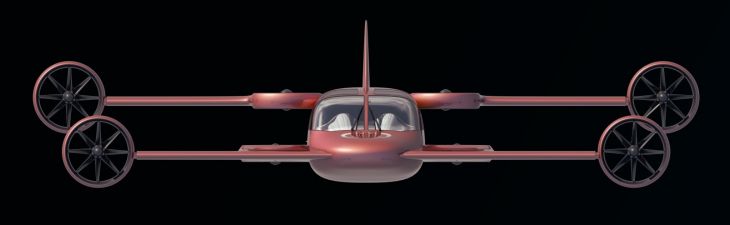
TRL2 front view
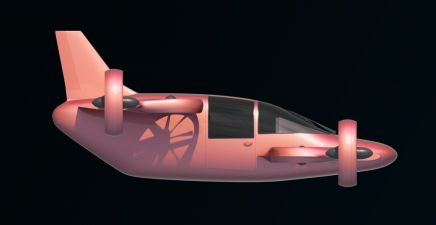
TRL2 side view
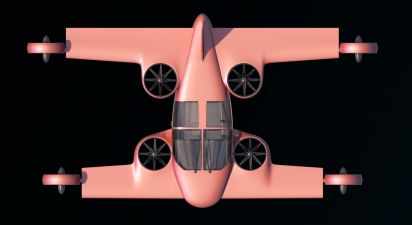
TRL2 top view


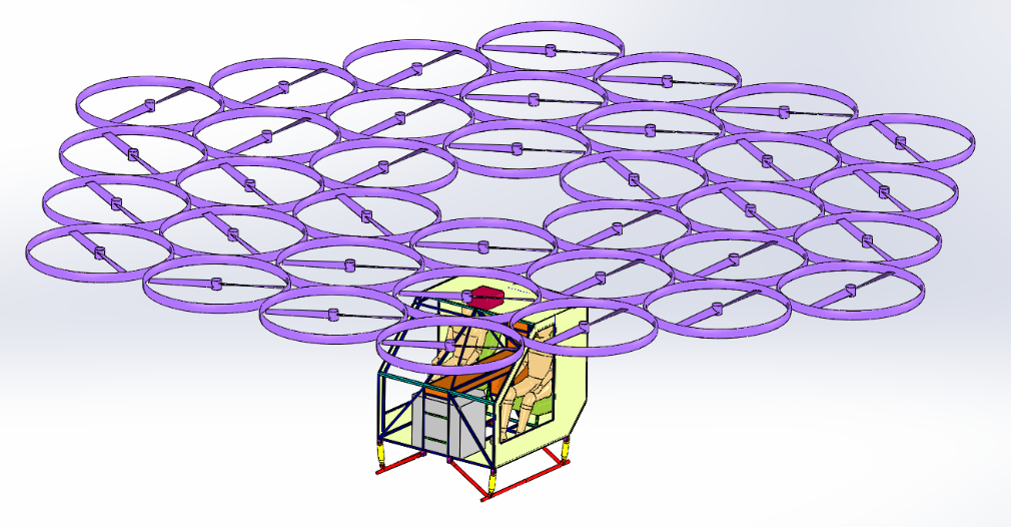


Lesser Open Source
The Mini-Bee project is developed under the dedicated Lesser Open Source License.
This collaborative framework allows academic, industrial and individual contributors to participate in an open-innovation workflow. Project works are mainly shared on the public wiki, with coordination and project management support.
Private tasks, confidential work or products covered by other licenses or intellectual property rights may also be included in the project. In that case, only interface works are covered by the open-source paragraph of the license.
Useful links
Why TRL 3 mattered
TRL 3 was a key stage because it gave the Mini-Bee project its first proof-of-concept foundations.
It connected the concept to academic studies, technical simulations, prototype work and subsystem reviews. It also prepared the project for the TRL 4 stage, where demonstrator work and deeper system validation could begin.
Transition to the next stage
Next maturity step: TRL 4 – Technology Validated in Laboratory.
At TRL 4, the project moves from early proof-of-concept work toward validation of key technologies in controlled environments.